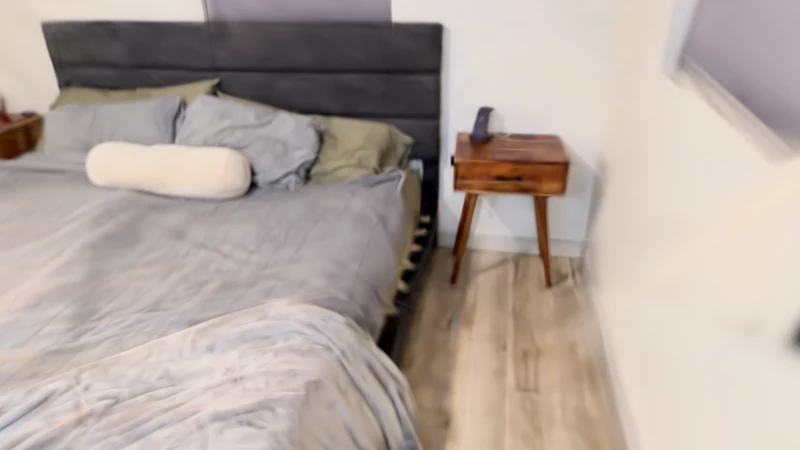
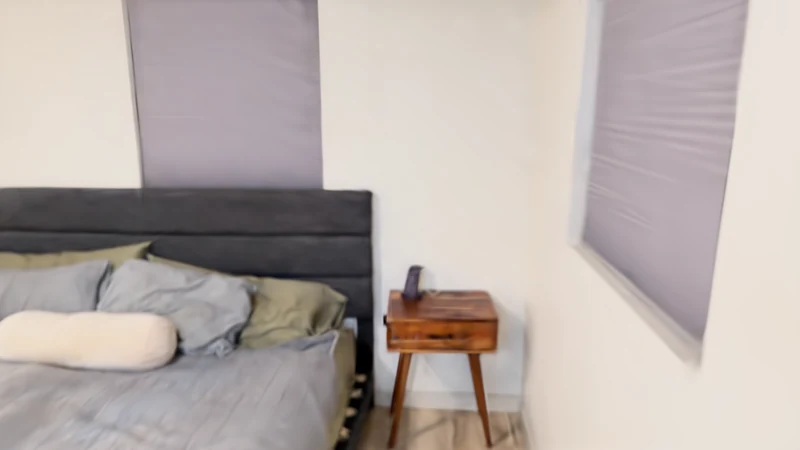
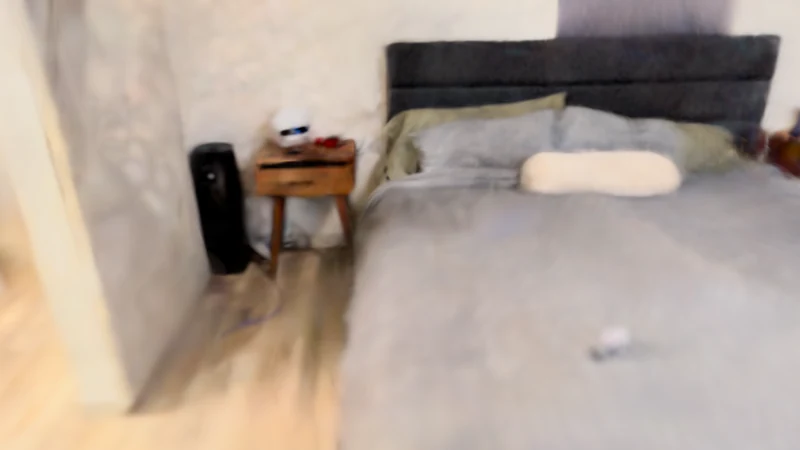
A harder test before the next render.
Camera refinement helps on reserved images, too. A wider audit shows where the whole-room approach still needs work.
Reserved-image test · improved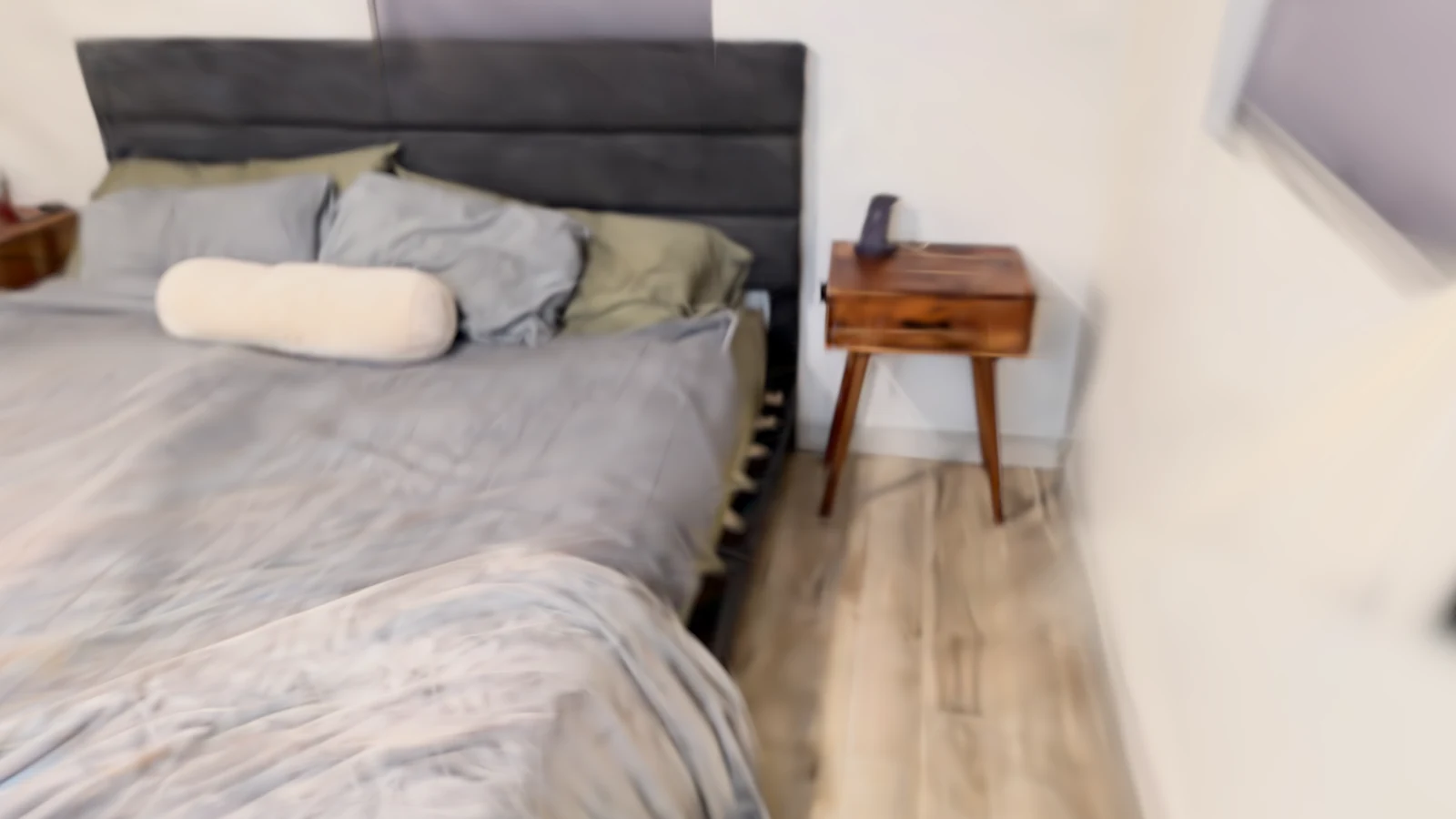 After
AfterTest small, check the whole scan
Before spending time on another full-room render, we checked how well the scan connects and tried camera refinement in four areas: bedroom furniture, the bathroom doorway, shower glass and the closet. This gave us a more useful answer than simply training longer.
The audit covered all 872 retained frames and 9,040 possible image pairs, including a wider search around weak connections. The largest connected visual group grew from 624 to 656 frames. The remaining 216 are not well connected by this matcher; that does not automatically mean those photographs are unusable.
A better average can hide a bad camera
The doorway experiment improved its average alignment error while leaving several cameras poorly constrained. The glass test found no multiview tracks that passed our reliable-depth checks. The closet fit also lacked enough support. We now check each camera and the connections between cameras before accepting a candidate.
Even the earlier bedroom test contained two weakly supported views. Removing those from this experiment left 18 connected cameras. The original capture and the app’s selected frames were left untouched.
Does the improvement survive a harder test?
We trained two small scenes using 15 bedroom images and reserved three more for comparison. Their RGB images and depth were excluded from scene training and initialization; feature matches still helped estimate camera positions.
All three reserved views improved: display-image error fell by 16–28%, averaging 22%. The headboard and furniture edges look cleaner, though fine texture remains soft and some details stretch. These measurements support continuing the approach; they do not make the renders photo-ready.
What happens next
The full-scene rerender stays on hold. Next we need camera fitting that can use reliable visual features where LiDAR struggles, while rejecting misleading matches around glass and repetitive detail. Once the weak connections are supported, a modest whole-scene trial will be worthwhile. All 3,335 original capture files passed their checksum check, and the first full-room reconstruction is preserved.
A closer look · nightstand detail
 After
After