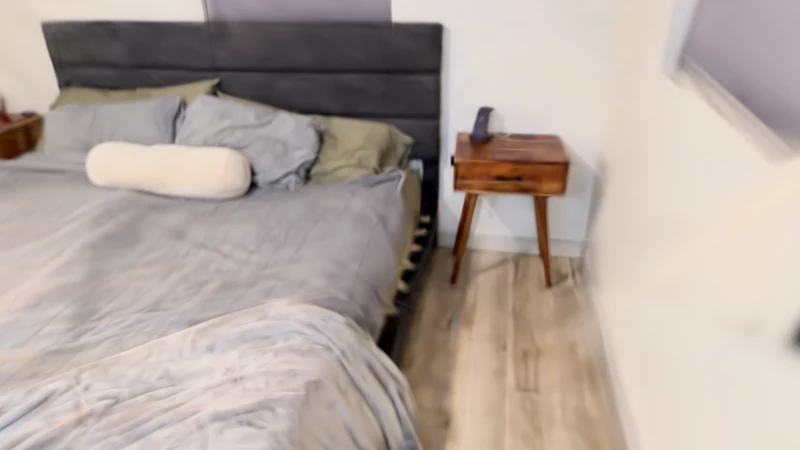
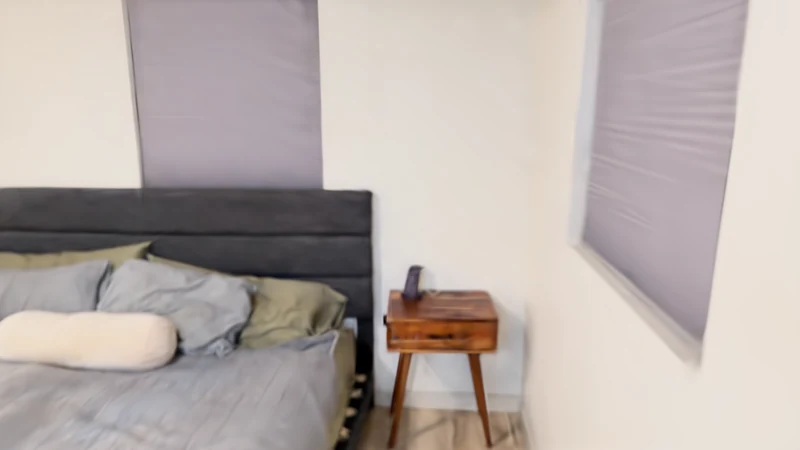
The first room is taking shape.
Our first real iPhone scan made it through the desktop pipeline and into a navigable reconstruction. Now we can see what needs work.
First scene · engineering trial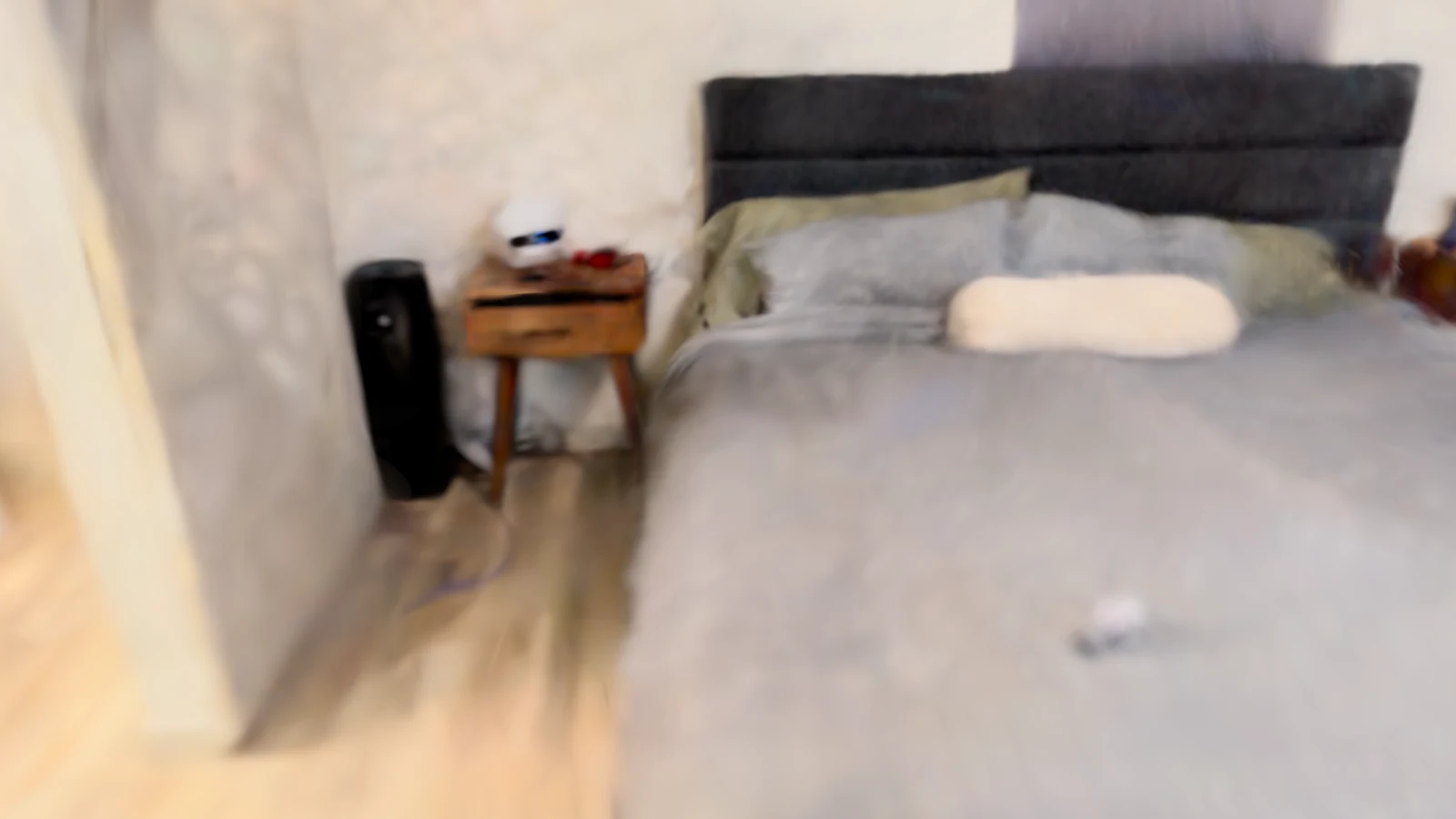 Render
From capture to a scene
The first real bedroom scan has made the full trip: iPhone capture, desktop import, automated frame selection, HDR preparation, reconstruction and display in the native desktop app. We can move through the result and export saved camera views. That turns the project from a collection of working parts into something we can actually judge.
The scan contained 1,110 frames. Automatic culling kept 872 for the trial, preserving the originals and making the selections reversible. The reconstruction used native 4K images from the 10-bit HLG capture, carried through a linear HDR processing path on the RTX 3090 Ti.
A promising, imperfect first look
The room’s layout and major furniture are recognizable. But smaller objects, fabric and edges are much softer than they should be, and some floating artifacts are visible. A successful render is a milestone; it is not yet a photograph we would deliver.
We stopped the planned longer run at a resumable 7,000-iteration checkpoint with 750,000 splats so we could inspect the problems first. Simply training longer would not tell us whether the camera geometry or source images were holding the result back.
What passed—and what comes next
The engineering checks passed for saving and reopening the scene, reproducible exports from saved views, and HDR transport. The photographic quality gate remains unmet. Some source images are visibly blurry, but other details are present in the photographs and missing from the reconstruction. That is something the desktop pipeline needs to address.
Our next step is to separate capture limitations from reconstruction errors: match the source camera precisely, audit alignment between overlapping images, and test corrections in a controlled comparison. Future sharper scans should help, while this imperfect one gives us a useful test of how robust the system really is.