Getting the cameras to agree.
Small camera corrections bring back cleaner edges. A controlled bedroom experiment points to our next step.
Local experiment · improved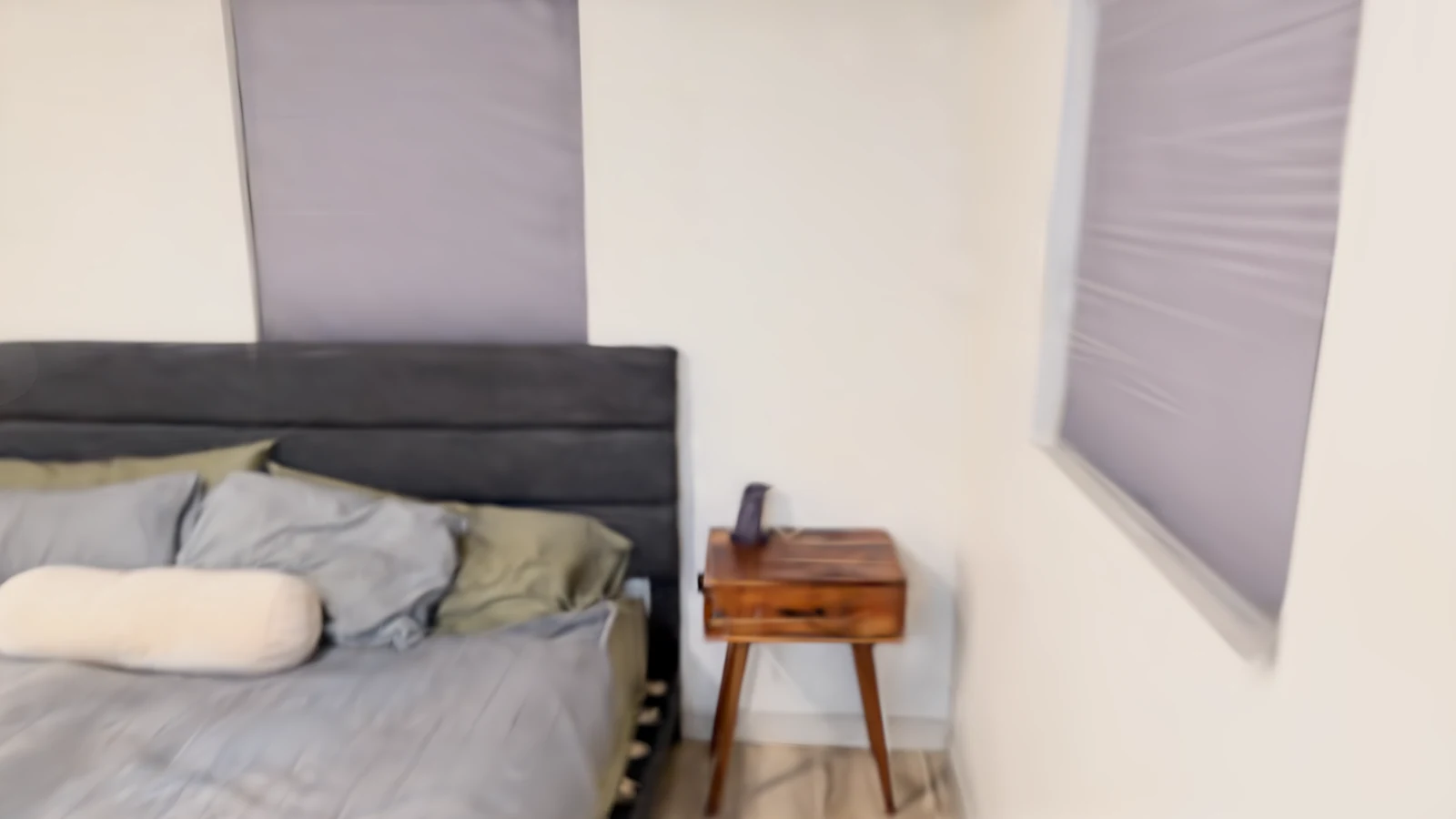 After
AfterWhat changed
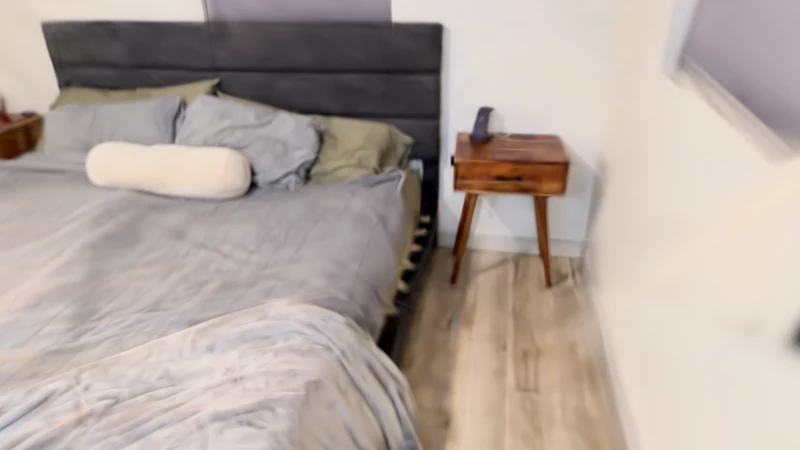
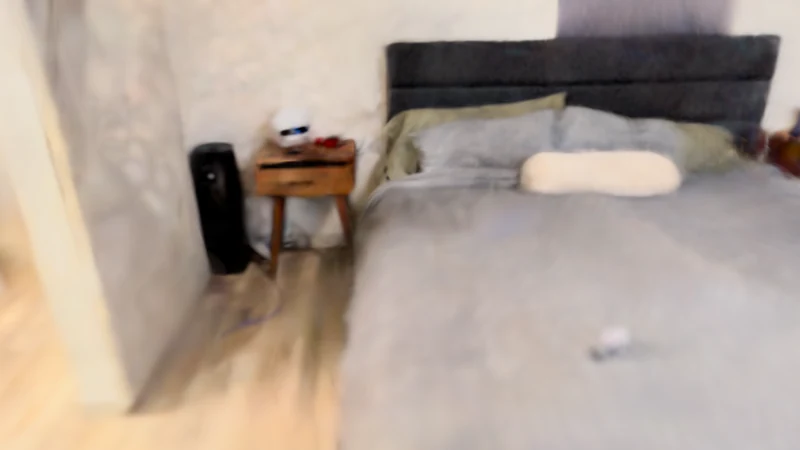
The first room reconstruction was recognizable, but some furniture looked smeared or doubled. Better phone capture will help with motion blur. This time we tackled a different problem: making the camera positions agree more accurately across images.
We corrected how the desktop matches the original camera’s framing, then tested small position and angle adjustments across 20 overlapping bedroom frames. The experiment used the same images, starting points and training settings on both sides. Only the camera positions changed.
What the pictures tell us
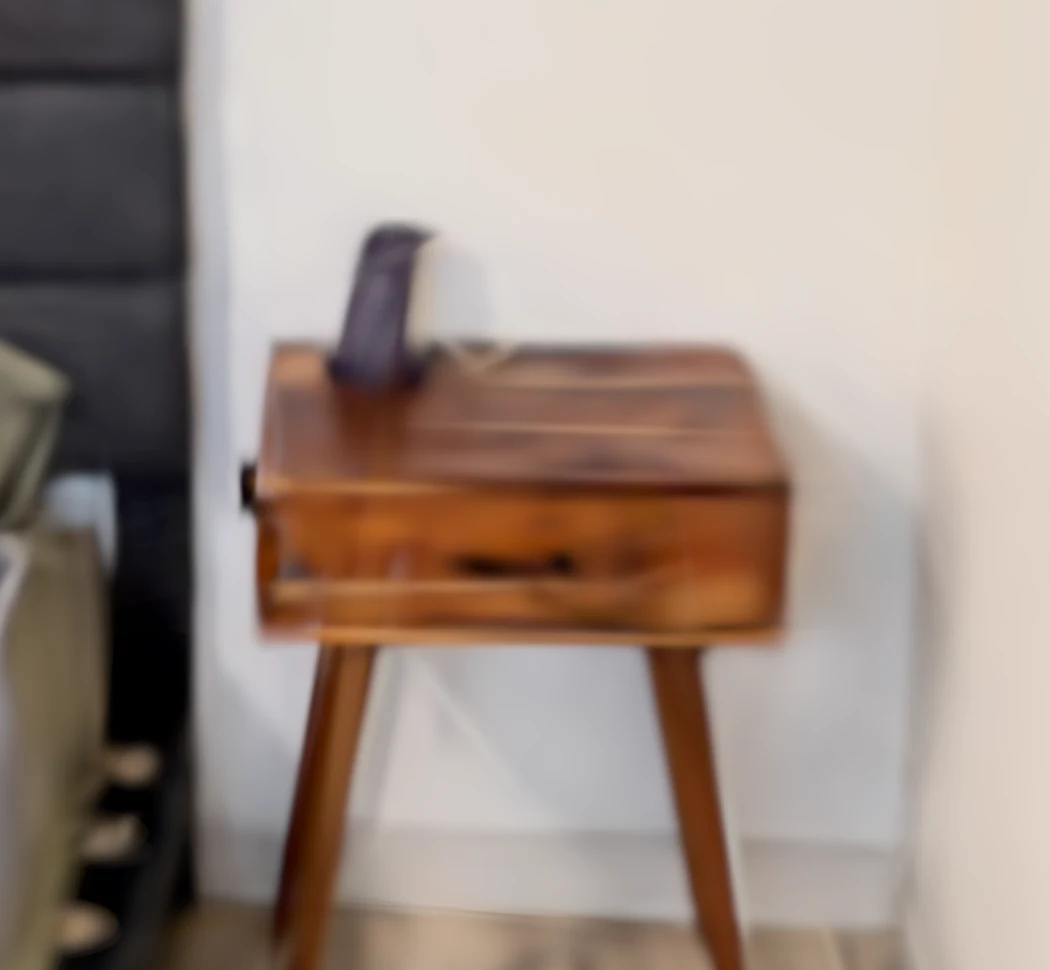
The headboard and nightstand now have cleaner edges, with less of the dragged-out appearance in the earlier reconstruction. All three checked views improved. Display-image error fell by 20–41% against the corresponding source images; that is a comparison measurement, not a score for overall photographic quality.
The alignment check also improved on features kept out of the optimization: median error fell by about 55%. Typical camera corrections were small—roughly 2.4 cm and 0.7 degrees. That gives us a useful reason to continue, beyond simply liking the after picture.
Still to solve
Fine fabric texture is still weaker than the source, and this is a local trial, not a corrected version of the whole room. These comparison views were used during training, so they do not yet prove how well new viewpoints will look. The original scan and full-room reconstruction are preserved.
Next up
Extend camera refinement across a connected set of room views, then compare a fresh full-scene reconstruction. Depth consistency and exposure normalization remain separate experiments. We are closer to a faithful scene, but these renders are not yet ready for MLS delivery.
A closer look · nightstand detail
 After
After